

Pomelo Flavor: The Honeyed Citrus Note That Gives Modern Drinks a Premium Edge
A formulator’s guide to Citrus maxima — sensory architecture, specification data, application fit, and why food teams in Asia, Europe, and North America source this profile from BAISFU.
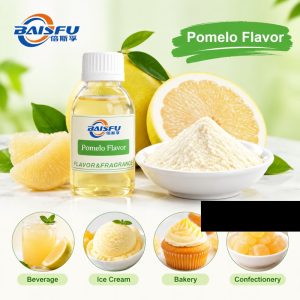
Pomelo Flavor Food Grade Fresh Citrus Pomelo Essence for Bakery
1. Product Introduction: How Pomelo Flavor Differs From Everyday Citrus
Pomelo flavor captures the clean, honeyed citrus lift of Citrus maxima: bright peel oil at the front, juicy pulp in the middle, and a gentle bitter edge that keeps sweetness honest. BAISFU builds this profile in four delivery formats, so beverage, dairy, confectionery, and bakery teams work from one sensory reference. Moreover, the flavor disperses fast, holds its shape through heat treatment, and never collapses into generic grapefruit. Consequently, formulators gain a citrus note that tastes premium and behaves predictably at scale.
Four delivery formats, one sensory target
Formulators rarely want the same physical form for a soda, a yogurt, and a hard candy. Therefore, we standardize the sensory profile across four carriers, and each one solves a different processing problem:
Water-soluble liquid. Propylene-glycol based, transparent, and cold-mixable, and it suits still drinks, syrups, and oral-care liquids that need a clean label-friendly base.
Oil-soluble liquid. Neat pomelo oil blends that dissolve into fat phases, and they excel in chocolate compounds, bakery shortenings, and oil-based dressings.
Emulsion. A sub-micron oil-in-water system that adds cloud, carries color, and resists ringing in carbonated and hot-fill lines.
Spray-dried powder. A free-flowing powder on a carrier matrix, and it gives dry blends, instant beverages, and seasoning sachets a long, stable shelf life without refrigeration.
Each format lands on the same sensory curve, and each one answers a specific line constraint. Beyond that, the dosage window stays narrow across all four, so a team can move a project from a bench sample to a production batch without reworking the formula.
2. Specifications: Pomelo Flavor at a Glance
Product name | Pomelo Flavor |
Appearance — | Liquid/powder |
Aroma profile | Green peel top note, honeyed pulp heart, soft bitter tail |
Solubility | Water-soluble grade disperses in cold water; oil-soluble grade blends into fat phases |
Recommended dosage | 0.05%–0.30% (beverages 0.05%–0.15%; dairy 0.10%–0.20%; confectionery 0.15%–0.30%) |
pH tolerance | 2.8–6.5 |
Thermal tolerance | Stable through 85–95 °C hot fill and UHT; add late where a line allows |
Shelf life | 18 months, unopened, at 5–25 °C away from direct light |
Packaging | 5 kg / 25 kg food-grade HDPE drums; powder in foil-lined bags |
MOQ | 5 kg |
Storage | Seal after opening; store below 25 °C; avoid moisture pickup in powder grades |
3. Application Scenarios: Where Pomelo Flavor Earns Its Place
This profile fits any system that needs brightness without the sharp acidity of lemon or the familiarity of orange. In practice, six categories show the strongest fit today.
Ready-to-drink tea and juice blends. Honey-pomelo tea dominates convenience shelves across East Asia, and the flavor carries both the peel top note and the pulp body in one addition. Additionally, it masks the tannin edge of green and oolong bases, so a 0.08% dose delivers a fuller mouthfeel without extra sugar.
Carbonated soft drinks and flavored water. The emulsion grade builds cloud, holds a stable ring-free collar, and survives the pressure drop at filling. Moreover, its bitterness reads as “adult” refreshment, and that positions a brand between a sugary soda and a plain sparkling water.
Dairy, yogurt, and plant-based drinks. Pomelo pairs cleanly with cultured notes, and the flavor lifts a plain yogurt base without the sour spike that lemon often brings. Similarly, oat and coconut bases gain a citrus lift that hides cereal off-notes.
Confectionery and bakery. Gummies, hard candies, and panned chews use the powder or emulsion grade, because the flavor survives the cook step and does not migrate into packaging. Beyond that, cream fillings, macarons, and citrus curds gain a perfumed top note that a natural juice concentrate cannot deliver at the same cost.
Frozen desserts and beverages. Sorbets, ice creams, and frozen cocktails need a flavor that stays linear at low temperature, and pomelo holds its brightness below −18 °C. Meanwhile, the oil-soluble grade disperses evenly into a dairy fat base and prevents the waxy aftertaste that water-based flavors sometimes leave.
Functional and oral care. Electrolyte sticks, effervescent tablets, and mouthwash formulas use pomelo to make a functional dose pleasant. Furthermore, the bitterness sits low enough that it never fights a mineral or a menthol note, and that balance keeps compliance high among repeat users.
4. Why Choose BAISFU for Pomelo Flavor
BAISFU began operations in Xi’an in December 2009, and we have supplied food flavors to processors in more than 40 countries since then. Our seasoning range alone covers 96 catalogued profiles, and our fruit and citrus lines extend that library with application-specific grades. Consequently, a buyer who needs pomelo for a beverage and pomelo for a candy works with one supplier, one document set, and one technical contact.
Raw material control. We source citrus oils from established growers and distillers, and we qualify every incoming lot against a retention sample before release to production.
Analytical depth. Gas chromatography–mass spectrometry and high-performance liquid chromatography map each batch, and the results confirm the limonene-to-nootkatone ratio that defines a true pomelo profile.
Sensory verification. A trained panel scores aroma, body, bitterness, and aftertaste against a golden standard, and no batch leaves the plant until it matches.
Documentation. Every drum ships with a COA, and TDS and MSDS files reach a buyer’s inbox within one business day of a request.
Custom work. We adjust sweetness, bitterness, and pulp character to a client’s target, and we run OEM and ODM programs under strict confidentiality agreements.
Supply reliability. A 5 kg MOQ supports pilot trials, and 25 kg drums scale into full production without a change in specification.
5. Frequently Asked Questions
How does pomelo flavor differ from grapefruit flavor?
Grapefruit has a sharp, sulphuric bitterness with a dry finish, while pomelo offers a sweeter, honeyed heart and milder lingering bitterness. Tasters find pomelo fuller and more floral.
What starting dosage should a formulator try?
We suggest 0.05%–0.15% for beverages, 0.10%–0.20% for dairy, and 0.15%–0.30% for confectionery.
Does the flavor survive pasteurization and hot fill?
Yes. The emulsion and powder grades hold their profile through 85–95 °C hot fill and through UHT treatment. Furthermore, we advise dosing late in the process wherever a line allows, because late addition always protects the volatile top note.
Can pomelo flavor work in a clear beverage?
Absolutely. The water-soluble liquid grade stays transparent and adds no haze, so clear sodas, sparkling waters, and clear energy drinks all work. Meanwhile, the emulsion grade builds cloud on purpose, and a formulator chooses between the two based on the visual story the brand wants to tell.
6. Let’s Build Your Pomelo Prototype
Send your target dosage, process conditions, and packaging format to wendy@baisfu.com, and our technical team replies within one business day with a data sheet, a sample offer, and a quotation matched to your line.
You can also review the full flavor library at https://food-flavors.com/ and compare citrus grades side by side. Above all, we want your first trial to answer the only question that matters: does the drink taste like fresh pomelo? Let’s find out together, one batch at a time.
BAISFU · wendy@baisfu.com · https://food-flavors.com/