

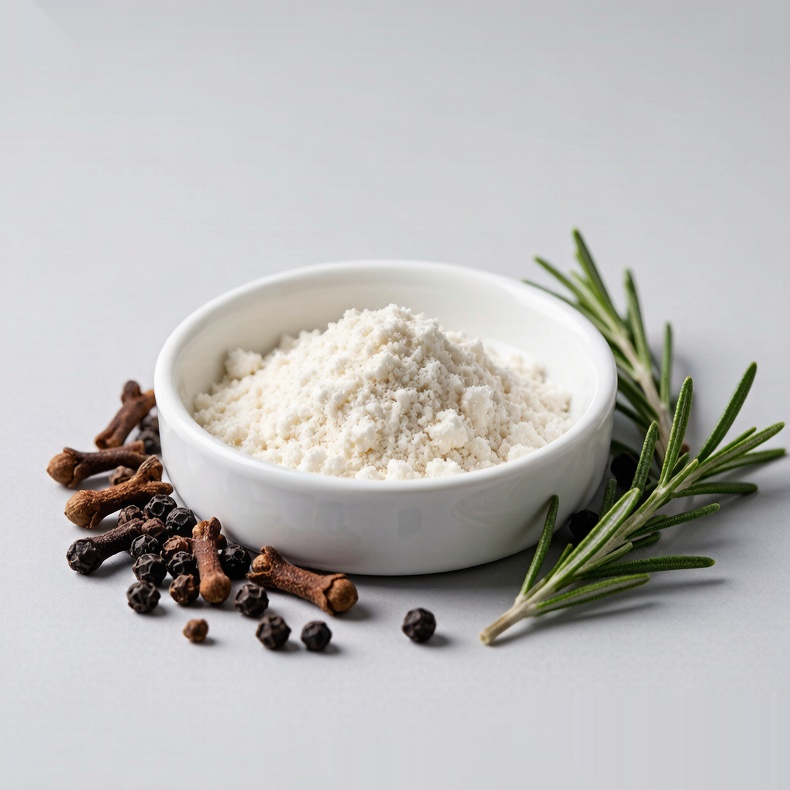
Caryophyllene oxide is one of the most versatile sesquiterpene oxides in the natural products industry. Although it often flies under the radar compared to better-known terpenes like limonene or linalool, this compound plays a critical role across food flavoring, fragrance formulation, and pharmaceutical research. If you work with spice-derived ingredients or develop complex flavor profiles, understanding caryophyllene oxide gives you a distinct advantage.
What Is Caryophyllene Oxide?
Caryophyllene oxide is a bicyclic sesquiterpene oxide with the molecular formula C₁₅H₂₄O and CAS number 1139-30-6. It forms through the oxidation of β-caryophyllene, one of the most abundant sesquiterpenes found in nature. The compound carries a characteristic woody, spicy aroma with subtle earthy undertones — a scent profile that makes it immediately recognizable in essential oil analysis.
Industrially, manufacturers isolate caryophyllene oxide from botanical sources through steam distillation followed by fractional purification. The result is typically a white to off-white crystalline powder or a pale yellow viscous liquid, depending on the purity grade and processing method. High-purity material (typically 95% and above) commands premium value in both the flavor and pharmaceutical sectors, because trace impurities can significantly alter the sensory profile or biological activity of the final product.
The compound’s stability under ambient storage conditions adds to its commercial appeal. Unlike some volatile terpenes that degrade rapidly when exposed to air or light, caryophyllene oxide remains relatively stable, making it a practical choice for formulators who need reliable shelf-life performance.
Natural Sources and Botanical Origin
Caryophyllene oxide occurs naturally in a remarkably wide range of plants, which speaks to its fundamental role in plant biochemistry and ecological signaling. Understanding where it comes from helps buyers evaluate source quality and regional supply dynamics.
Clove oil ranks among the richest sources, with caryophyllene oxide concentrations reaching up to 12% in certain chemotypes. Clove buds and stems from Indonesia and Madagascar consistently deliver high yields, and the established clove supply chain makes this one of the most cost-effective routes for commercial extraction.
Black pepper essential oil contains significant quantities of caryophyllene oxide, typically ranging from 5% to 10%, depending on the variety and growing conditions. Indian Malabar and Vietnamese Lampong peppers show particularly favorable profiles. For manufacturers formulating savory or spicy flavor systems, black pepper-derived material offers excellent synergy with the target application.
Cannabis and hemp also produce caryophyllene oxide as a minor but analytically significant component. While the compound itself carries no psychoactive properties, its presence in cannabis-derived essential oils has attracted growing research interest, particularly around the entourage effect and potential therapeutic synergies.
Rosemary, oregano, and basil contribute smaller but commercially meaningful quantities. Mediterranean-grown rosemary, in particular, yields a complex sesquiterpene fraction where caryophyllene oxide features prominently. These sources appeal to formulators targeting the clean-label and natural products market segments.
Copaiba balsam, sourced primarily from the Amazon region of Brazil, deserves special mention. Copaiba oil contains exceptionally high levels of β-caryophyllene, and the oxidation product — caryophyllene oxide — forms naturally during aging and processing. This source has gained traction in both the fragrance and nutraceutical industries.
Key Applications Across Industries
Food and Beverage Flavoring
The food industry uses caryophyllene oxide primarily as a flavor modulator and enhancer rather than a standalone characterizing ingredient. Its woody-spicy character rounds out savory flavor profiles, adds depth to meat and grill-type seasonings, and provides structure to complex spice blends.
In the beverage sector, caryophyllene oxide appears in certain craft formulations — particularly botanical spirits, spiced liqueurs, and functional beverages that leverage herbal notes. Formulators value its ability to bridge disparate flavor components, creating a smoother, more integrated sensory experience.
Baked goods and confectionery represent a growing application frontier. When used at low parts-per-million levels, caryophyllene oxide can enhance the perception of warmth and richness in products like gingerbread, spiced cookies, and dark chocolate confections. The key lies in precise dosing — too much overwhelms, while the right amount elevates the entire flavor matrix.
Fragrance and Personal Care
The fragrance industry has long recognized caryophyllene oxide as a valuable middle-note fixative. Its moderate volatility and excellent tenacity help anchor more volatile top notes while contributing its own distinctive woody character. Perfumers use it to build oriental, woody, and spicy accords, often in combination with sandalwood materials, patchouli, and cedarwood derivatives.
In personal care products, caryophyllene oxide serves dual purposes. It imparts a natural, sophisticated scent to soaps, lotions, and deodorants while also contributing to product preservation — though manufacturers should not rely on it as a primary preservative system. Its compatibility with a wide range of surfactants and emulsifiers makes formulation straightforward across product categories.
Pharmaceutical and Nutraceutical Research
Research interest in caryophyllene oxide has grown substantially over the past decade. Peer-reviewed studies have explored its anti-inflammatory, antimicrobial, and antifungal properties, with promising results across multiple in vitro and in vivo models. While the compound is not an approved drug substance, it serves as an important reference standard and starting material in natural product research programs.
The nutraceutical sector has begun incorporating caryophyllene oxide into dietary supplement formulations, particularly products targeting joint health, digestive comfort, and general wellness. Consumers increasingly seek botanical ingredients with established scientific literature, and caryophyllene oxide fits this demand profile well.
It is worth noting that anyone developing pharmaceutical or nutraceutical products containing caryophyllene oxide must verify the regulatory status in each target market. Requirements vary significantly between regions, and compliance falls squarely on the formulator and brand owner — not the raw material supplier.
Quality Specifications and Testing
Purchasing caryophyllene oxide requires attention to several critical quality parameters. Experienced buyers know that the cheapest quote rarely delivers the best long-term value.
Purity stands as the most obvious metric. GC-FID or GC-MS analysis should confirm the stated purity level — typically expressed as area percentage. Reputable suppliers provide a Certificate of Analysis (CoA) with every batch, and buyers should verify that the analytical method matches industry standards.
Isomer ratio matters more than many buyers realize. Caryophyllene oxide exists in multiple isomeric forms, and the biological activity and sensory profile can vary between isomers. A full characterization should include isomer distribution data, particularly for pharmaceutical and high-end fragrance applications.
Heavy metals and residual solvents testing follows pharmacopoeia standards in most cases. USP, EP, or equivalent monographs provide clear limits for lead, arsenic, cadmium, and mercury, as well as residual solvent levels. Buyers should request documentation for each parameter rather than assuming compliance.
Microbial limits become especially important for food-grade and nutraceutical-grade material. Total aerobic microbial count, yeast and mold counts, and absence of specified pathogens (E. coli, Salmonella, S. aureus) should all appear on the CoA.
Physical characteristics — appearance, melting point, optical rotation, and refractive index — provide additional quality assurance. Any deviation from the expected range may indicate contamination, degradation, or incomplete purification, and warrants further investigation before accepting the shipment.
Supply Chain Considerations
Sourcing caryophyllene oxide at commercial scale presents unique challenges that distinguish experienced buyers from newcomers. The global supply chain depends heavily on agricultural production of the source botanicals, which means harvest cycles, weather patterns, and geopolitical factors all influence availability and pricing.
Seasonality affects every botanical supply chain. Clove harvests peak at specific times of the year in Indonesia and Madagascar, and any disruption — whether from adverse weather, labor shortages, or logistical bottlenecks — can ripple through the entire value chain. Building buffer stock and maintaining relationships with multiple suppliers helps mitigate this risk.
Geographic concentration creates both opportunities and vulnerabilities. Indonesia dominates global clove production, Brazil leads in copaiba, and India remains the primary source for black pepper derivatives. Political instability, trade restrictions, or natural disasters in any of these regions can cause supply disruptions that take months to resolve.
Quality consistency separates professional suppliers from opportunistic traders. Because botanical raw materials vary inherently — two batches of clove buds from the same region can differ measurably in composition — the extraction and purification process must compensate for input variability. Suppliers who invest in advanced fractionation equipment and rigorous quality control deliver consistent material batch after batch.
Documentation and traceability increasingly matter to end customers, particularly in the European and North American markets. Complete documentation packages should include the CoA, MSDS/SDS, origin certificates, and any applicable certification documents (KOSHER, HALAL, organic). Full supply chain traceability — from the farm or collection point through processing to final shipment — provides confidence and supports regulatory compliance.
Why Quality Starts at the Source
The difference between an average caryophyllene oxide supplier and an excellent one becomes apparent only after years of working with the material. Excellent suppliers invest in three areas that directly impact product quality and customer experience.
First, they maintain direct relationships with growers and collectors rather than buying through layers of intermediaries. Direct sourcing enables quality control at the point of harvest, ensures fair compensation for producers, and provides genuine traceability — not just paperwork.
Second, they operate manufacturing facilities equipped for modern separation technology. Molecular distillation, preparative chromatography, and controlled oxidation processes all contribute to achieving and maintaining high purity levels. Facilities certified to international standards — ISO 9001 for quality management, ISO 22000 for food safety, and relevant GMP guidelines — demonstrate a commitment that goes beyond marketing claims.
Third, they maintain technical expertise in-house. A supplier who can discuss isomer ratios, suggest formulation optimizations, and troubleshoot quality issues adds far more value than one who simply ships drums. Technical support differentiates a true partner from a transactional vendor.
BAISIFU Biotechnology Co., Ltd., based in Xi’an, China, operates at this level. With over 15 years of experience in the plant extract and natural flavor ingredient industry, the company serves customers across more than 30 countries. Its manufacturing facilities hold ISO 9001 and ISO 22000 certifications, and its products carry KOSHER and HALAL certifications to support diverse market requirements. For caryophyllene oxide and related sesquiterpene ingredients, BAISIFU offers consistent quality, complete documentation, and the technical support that professional buyers expect.
Common Questions About Caryophyllene Oxide
What concentration should I use in flavor formulations?
Usage levels depend entirely on the application. In savory seasonings and spice blends, typical concentrations range from 0.01% to 0.1% of the finished product. Beverage applications generally use lower levels — 1 to 10 ppm — to avoid overpowering other flavor components. Always conduct sensory evaluation with your specific base formulation, because interactions between ingredients can amplify or suppress the perceived intensity.
How should I store caryophyllene oxide?
Store in tightly sealed containers away from direct light, heat sources, and moisture. Recommended storage temperature ranges from 15°C to 25°C. Under these conditions, properly purified caryophyllene oxide remains stable for at least 24 months. After opening, minimize headspace and reseal promptly to prevent oxidation.
Can I use caryophyllene oxide in organic-certified products?
This depends on the source material and the extraction process — not on the compound itself. Caryophyllene oxide derived from certified organic botanicals using permitted extraction methods may qualify for organic certification. Verify the organic status of the specific batch with your supplier and ensure the certifying body accepts the production method.
Is caryophyllene oxide safe for food use?
Caryophyllene oxide appears on the FEMA GRAS list (Generally Recognized As Safe) for use as a flavoring substance. It also appears in the European Union’s Register of Flavoring Substances. As with all flavor ingredients, users bear responsibility for ensuring that the specific application, usage level, and labeling comply with the regulations of each target market.
The Bottom Line
Caryophyllene oxide deserves more attention than it typically receives. As a naturally occurring sesquiterpene oxide with broad applications across food, fragrance, and pharmaceutical industries, it offers genuine functional value rather than mere label appeal. The key to successful use lies in three areas: understanding the botanical source and its impact on quality, setting clear specifications and testing requirements, and working with suppliers who invest in quality infrastructure and technical expertise.
The global market for natural flavor ingredients continues to expand, driven by consumer demand for recognizable, plant-derived components. Caryophyllene oxide fits this trend perfectly — it comes from familiar botanicals, it has a well-characterized safety profile, and it delivers measurable sensory benefits. Formulators who master this ingredient gain a versatile tool that works across multiple product categories and market segments.
For buyers evaluating supply options, the decision ultimately comes down to more than price per kilogram. Consistent quality, reliable documentation, supply chain transparency, and accessible technical support determine whether a supplier relationship delivers value or creates headaches. Choose accordingly.